


National Geographic 1970 February
Publisher: National Geographic
Format: Paperback
ISBN: none
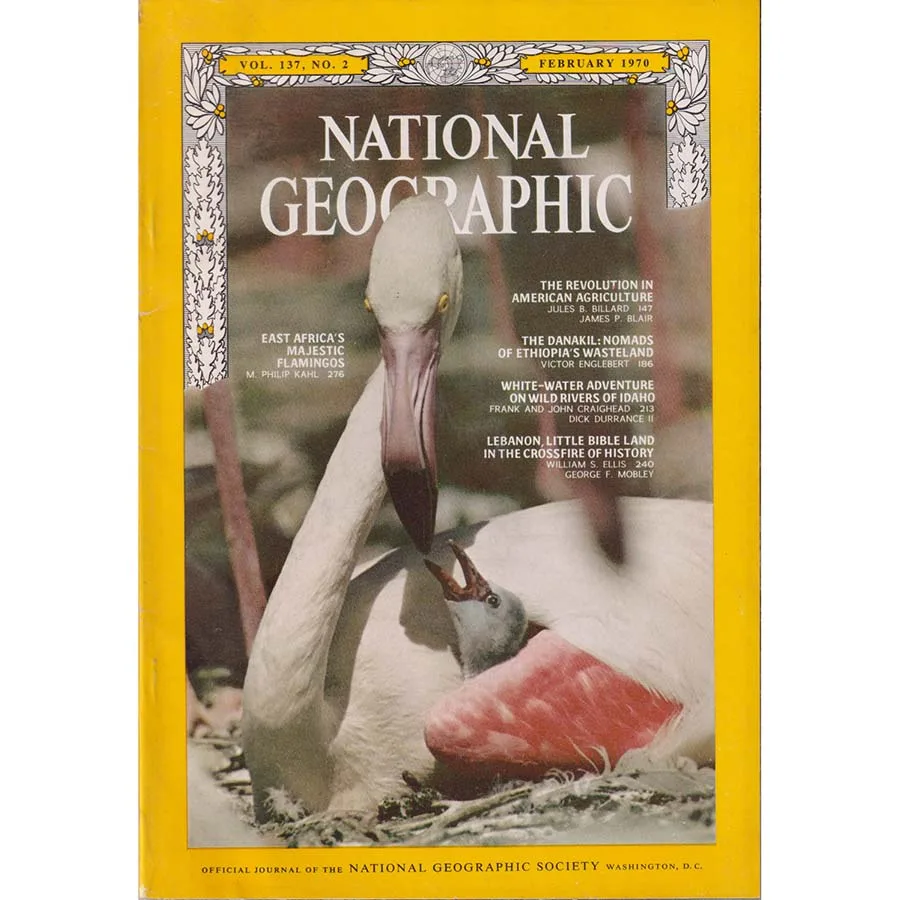
February 1970, and National Geographic is serving you peak “softly educational, secretly intense” energy — wrapped in that iconic yellow border and topped with a floral 1970s masthead that looks like the magazine is wearing a nice little bonnet. The cover image is pure tender drama: a long-beaked, sharp-eyed bird (stork vibes, judgement levels high) hovering protectively over a fluffy chick, with a glorious splash of pink in the frame like nature’s own accent colour. It’s the kind of scene that says, “Yes, this is beautiful,” and also, “Yes, everything out here is survival.”
Inside, you get that classic vintage Geographic approach: wide-eyed curiosity, a steady authoritative tone, and absolutely no fear of tackling subjects that feel oddly modern for 1970. The contents are a wonderfully eclectic buffet, the way these older issues always are — like someone threw a dart at a globe, then a dart at a textbook, and decided you deserved both.
First up: East Africa’s majestic flamingos — because nothing says “cheer up, it’s February” like a vast pink congregation of birds doing elegant chaos on a salt lake. Expect sweeping photography, the sort of writing that makes you pause mid-page just to imagine the soundscape, and a gentle reminder that nature can turn “mud and minerals” into spectacle if it feels like it.
Then the issue pivots—because it always pivots—to The revolution in American agriculture, which is Geographic’s calm way of saying: “Here is a massive transformation in how humans feed themselves.” It’s tractors, science, changing landscapes, and the slightly ominous feeling that every efficiency comes with a trade-off. You’ll find yourself nodding thoughtfully while realising you know far less about farming than you assumed, despite having opinions about food like everyone else.
Next: The Danakil: Nomads of Ethiopia’s wasteland — an already cinematic headline that basically promises heat, salt, endurance, and people living in conditions that would make your average modern complaint evaporate on contact. It’s the kind of feature that makes you grateful for shade, water, and the concept of “leaving the house without planning like an expedition.”
And because this magazine refuses to be predictable, it throws in white-water adventure on wild rivers of Idaho — a burst of American outdoors bravado and cold spray — followed by Lebanon: little Bible land in the crossfire of history, which has that unmistakable Geographic knack for making a place feel both timeless and precariously current. It’s history, culture, geography, and the sensation that some landscapes carry centuries like layers of sediment.
All of this comes in that wonderfully thick, slightly formal 1970 package: big photo spreads, captions that mean business, and prose that assumes you’re capable of sitting still and learning something without a dopamine reward every twelve seconds. A radical concept, honestly.
Condition is Good, which means this copy has made it through five decades of shelves and stacks with respectable dignity — still readable, still presentable, still ready to deliver its monthly dose of “the world is larger than you.” No ISBN, because magazines in 1970 didn’t need barcodes to prove they mattered. Sold by Crappy Old Books, which feels exactly right: a slightly timeworn portal to an era when knowledge arrived in the post and the photographs were the closest thing to teleportation.
Perfect for collectors, bird nerds, armchair adventurers, lovers of vintage print, and anyone who wants a February issue that can take you from flamingo lakes to Ethiopian deserts to Idaho rapids to Lebanon — all without leaving your chair or getting your feet wet.
Keep browsing: See more National Geographic books Other books by National Geographic
